
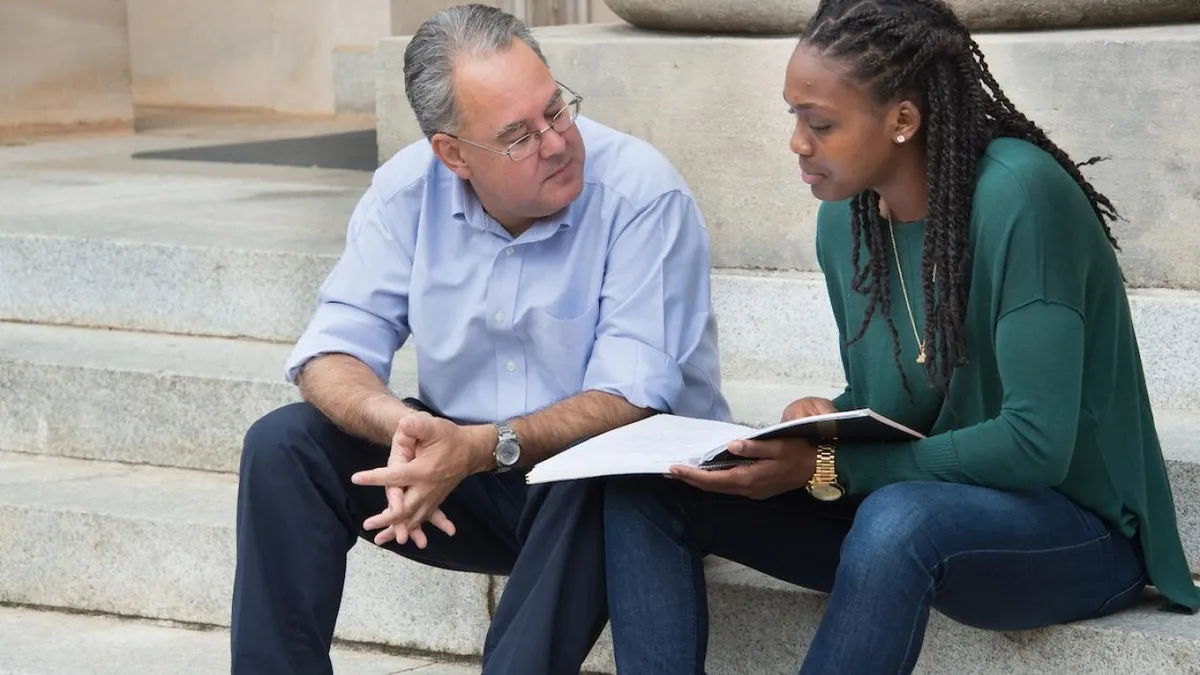
How to Build Real Relationships With Your Professors (And Why It Changes Everything)
Here is a statistic that should stop every college student in their tracks:
Most college students never visit their professor's office hours. Not once. In four years.
And most of those same students wonder why college feels transactional, lonely, and disconnected from any real future.
The relationship between a student and a professor is one of the most underleveraged assets in higher education. Letters of recommendation. Research opportunities. Graduate school connections. Career introductions. Mentorship that shapes the direction of your entire professional life.
All of it flows through relationships. And most students leave college having built almost none of them.
That ends today.
Why Students Don't Go to Office Hours — And Why Those Reasons Are Wrong
Let's name the excuses first, because they're real and they deserve to be addressed:
"I don't want to seem like I'm sucking up." — Professors hold office hours because they want students to come. Showing up is not brown-nosing. It's using the resource.
"I don't have anything to ask." — You don't need a burning question. Curiosity about the subject, a concept you want to understand more deeply, or even feedback on your work is enough.
"My professor seems intimidating." — Most professors soften dramatically one-on-one. The lecture persona is often very different from the actual human being.
"I'll go when I'm struggling." — Don't wait until you're in crisis. The students who show up before they need help are the ones professors remember — and advocate for.
💡 The best time to build a relationship with a professor is before you need anything from them. Show up in week three, not week twelve.

The First Visit: What to Say and How to Say It
The first office hours visit is the hardest one. Here's a script that works — not because it's manipulative, but because it's honest and human:
"Hi Professor [Name], I'm [your name] from your [course name] class. I really found [specific topic from a recent lecture] interesting — I wanted to ask you more about [specific question or angle]. Do you have a few minutes?"
That's it. Specific. Curious. Respectful of their time.
A few things to notice about that script:
It references something specific from class — which signals you were actually paying attention
It leads with curiosity, not need — which makes the interaction feel like a conversation, not a transaction
It asks permission for their time — which professors almost always appreciate
After that first visit, the relationship has started. From there, consistency builds it.
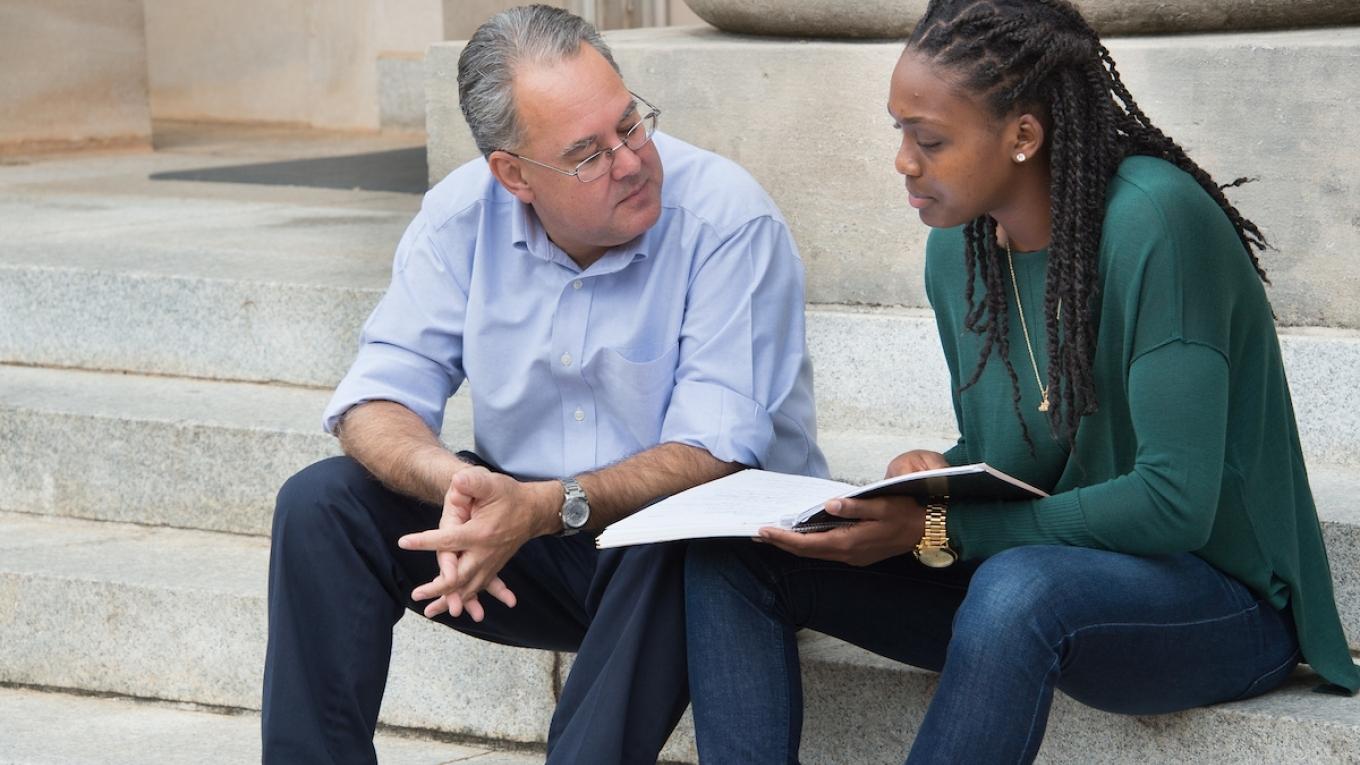
How to Email a Professor Professionally
Before you ever walk into office hours, you might need to email first. Here's what that looks like done right:
Subject: Question About [Topic] — [Your Name], [Course Name]
Dear Professor [Last Name],
I hope this message finds you well. I'm a student in your [course name] class (Section [X], [time]). I had a question about [specific topic] from [lecture/reading/assignment]. I want to make sure I understand [specific concept] correctly before [upcoming exam/assignment].
Would you be available to discuss this during office hours, or is there a time that works better for you?
Thank you for your time.
[Your Full Name]
What makes this email work:
Professional greeting and sign-off — not 'Hey' and not just your first name
Identifies who you are and which section you're in — professors teach hundreds of students
Specific question — not 'I'm confused about everything'
Offers flexibility on timing — makes it easier for them to say yes
Building the Relationship Beyond Office Hours
One visit doesn't build a relationship. Consistency does.
Here's what a real professor relationship looks like built over a semester:
Visit office hours two to three times — not just when you're struggling
Engage meaningfully in class — ask one thoughtful question per week
Share your academic interests and goals when the conversation opens naturally
Follow up after conversations — a brief thank-you email goes further than you'd think
Ask for feedback on your work before grades are finalized, not after
By the end of the semester, a professor who knows your name, your work, and your goals is someone who can write you a recommendation that actually means something. Not a form letter. A real endorsement from someone who can speak specifically to who you are as a thinker and a student.
💡 Graduate school admissions committees can tell the difference between a generic recommendation and one written by someone who actually knows the student. Professor relationships are how you get the latter.

A Note for Students Who Feel Like They Don't Belong in That Office
If you're a first-generation student, an international student, a student of color on a predominantly white campus, or anyone who has ever felt like academic spaces weren't built for you — this section is specifically for you.
The instinct to not take up space, to not bother the professor, to wait until you're 'good enough' to deserve the conversation — that instinct is understandable. And it is costing you.
You belong in that office. Your questions are worth asking. Your goals are worth advocating for. And the professors who are worth building a relationship with will show you that from the first visit.
If a professor makes you feel otherwise — that information matters too. Not every professor is a mentor worth pursuing. But don't let one bad experience close the door on all of them.
Your Network Starts Here
The relationships you build with faculty in college don't just help you get through the semester. They shape your graduate school applications, your career references, your research opportunities, and your sense of yourself as someone who belongs in academic and professional spaces.
That's not a small thing. That's everything.
If you're ready to build the kind of college experience that carries real weight after graduation — the MERIT Blueprint is built for exactly that. It gives you the framework for academic identity, strategic networking, and long-term confidence that turns a college degree into a launching pad.
👉 Learn more about the MERIT Blueprint →
Rooting for you,
Dr. JoNataye Prather (Coach Dr. J) 🎓

join the Private mentorship group

***DISCLAIMER: Coach Dr J provides educational content and guidance for general informational purposes. While we strive for accuracy, we make no guarantees regarding the completeness, accuracy, or suitability of the information provided. Use the information and materials at your own risk. We are not responsible for any loss or damage, including indirect or consequential loss, arising from your use of this website or the Coach Dr J products.***
Copyrights 2026 Dr JoNataye™ College 2 Career Blueprint | Terms and Conditions | Privacy Policy Built By: WebsterBerryMarketing.com
Facebook
Instagram
LinkedIn
Youtube